About the center
At the Center for Cognitive Modeling of Language we study language as a cognitive capacity, with a focus on how linguistic structure and meaning are represented and processed in the human mind and brain. We develop cognitive models of language competence and language processing by integrating linguistic theory with behavioral and neurolinguistic evidence.
The Center’s current research program is built around four major, interconnected areas:
- Psycholinguistics, where we use controlled behavioral experiments to study how speakers comprehend, produce and judge linguistic structure and meaning at the sentence level;
- Neurolinguistics, where we use EEG/ERP methods to investigate the neural dynamics of sentence processing;
- Semantics and experimental pragmatics, where we test theoretical models of sentence meaning and use in context;
- Multilingualism, where we study how multiple languages are represented, processed and reshaped in the multilingual mind.
The Center hosts a newly established EEG/ERP laboratory where we develop and test experimental hypotheses and paradigms informed by formal syntactic, semantic, and pragmatic theories.
The Center also develops research-based instruments for the study and assessment of language, with a particular focus on Slovene. These include language assessment tools and other language resources.
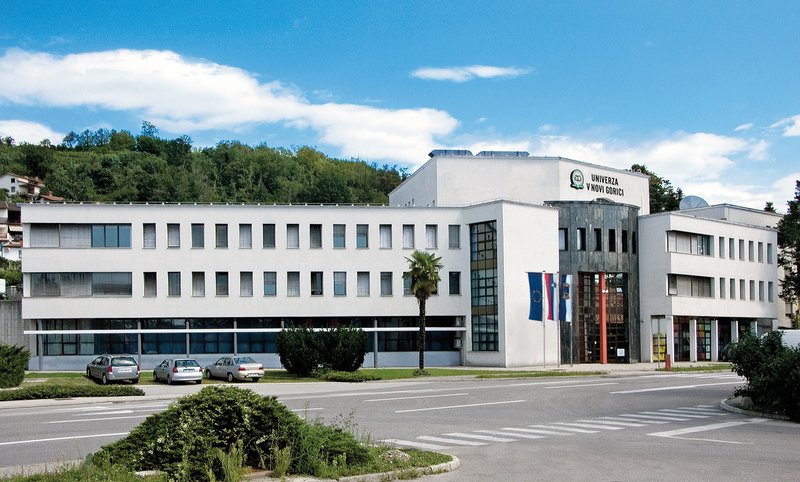
We are based in Nova Gorica, in the broader Nova Gorica–Gorizia area, where Slovene and Italian are used side by side. This multilingual setting provides a natural environment for research on language contact, bilingualism, heritage language and the ways speakers navigate multiple linguistic systems in everyday life.
The Center regularly hosts internships for students at all levels of study who are interested in gaining hands-on experience in a modern experimental language research setting.