Public panel discussion on the future of education and research in the age of AI
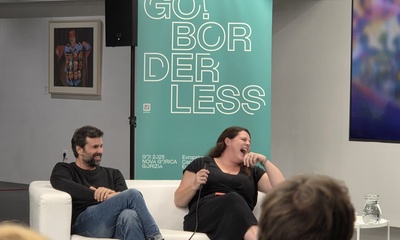
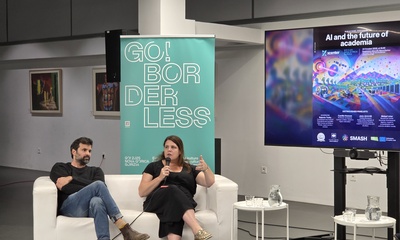
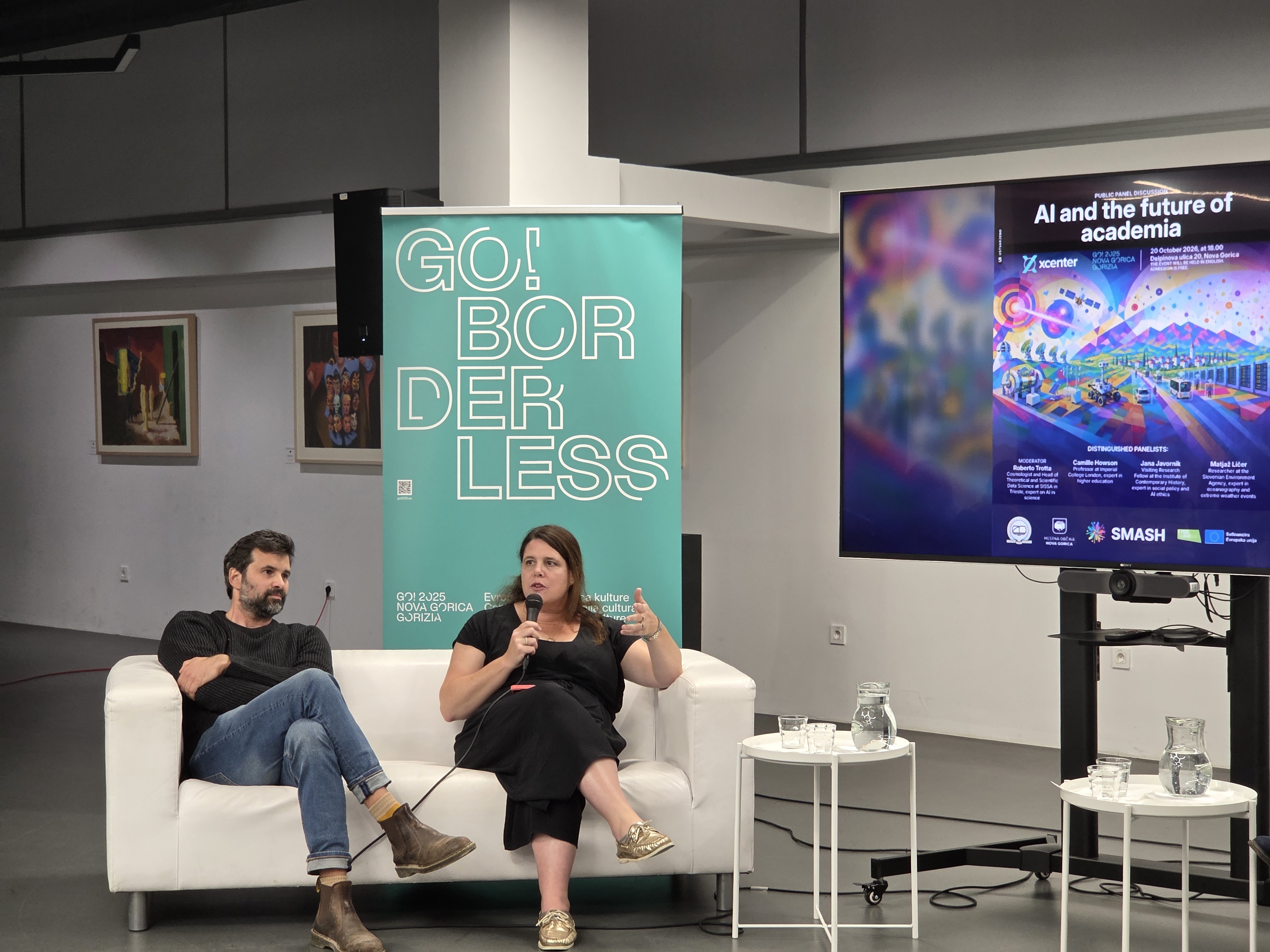
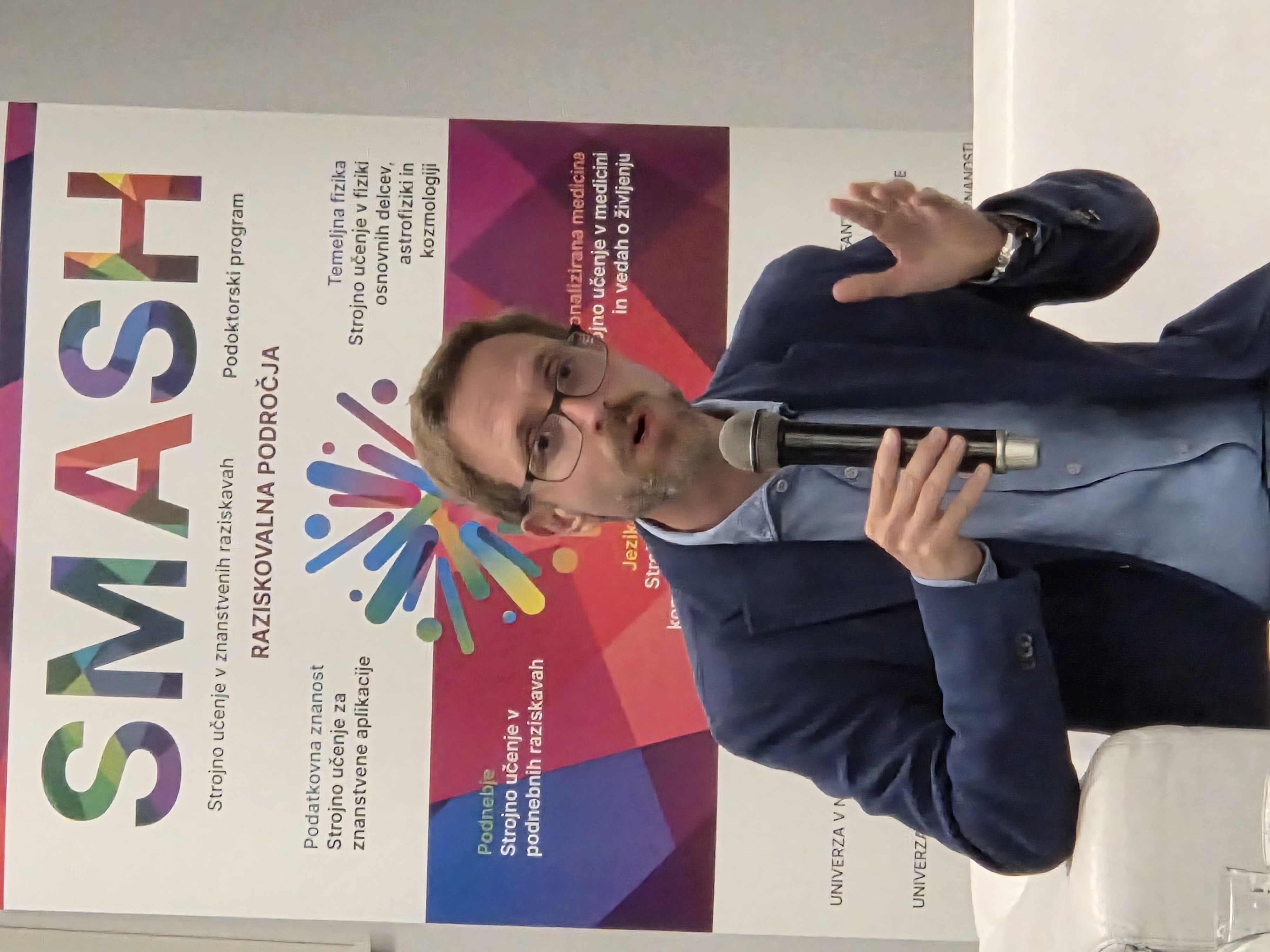
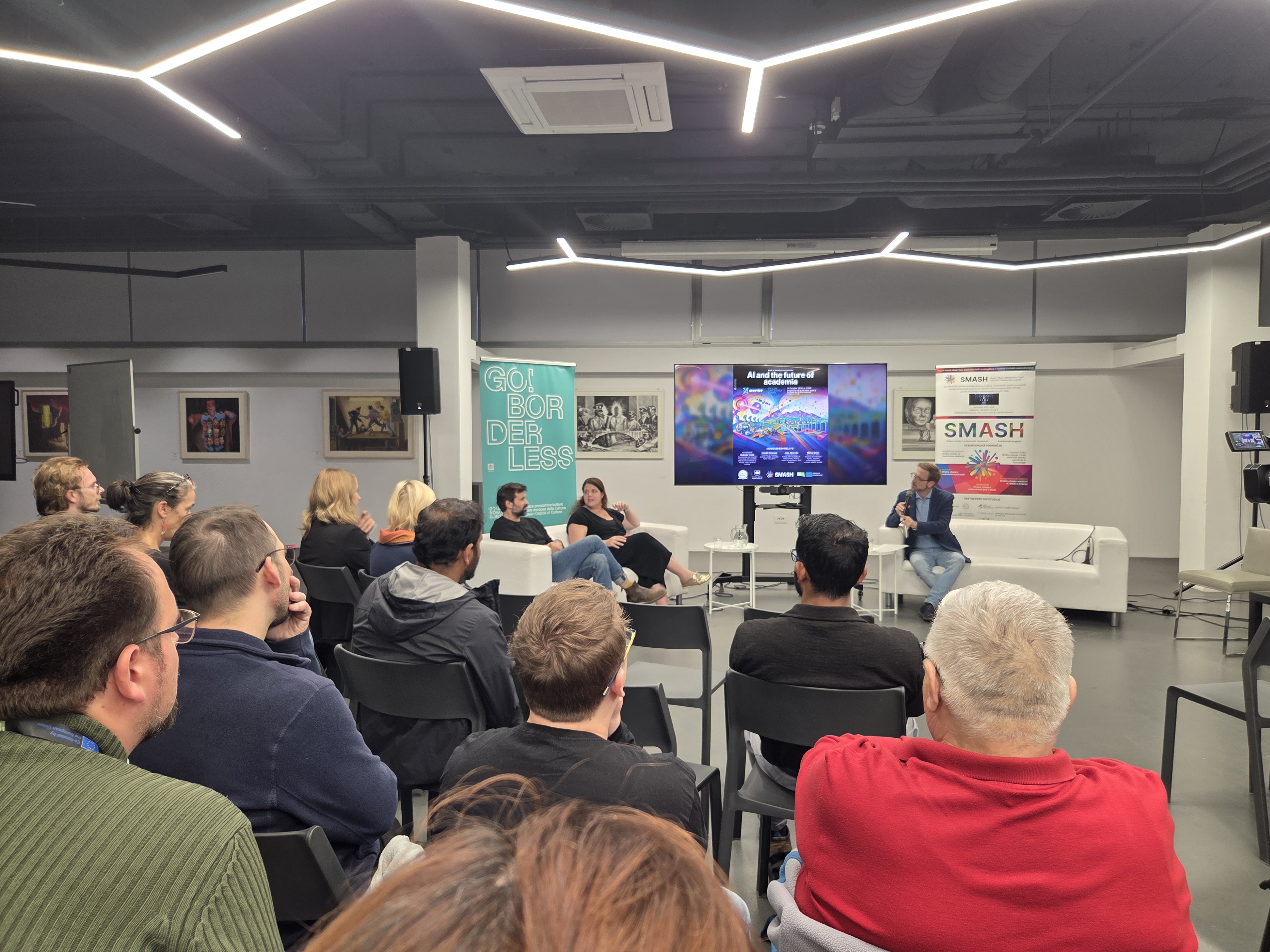
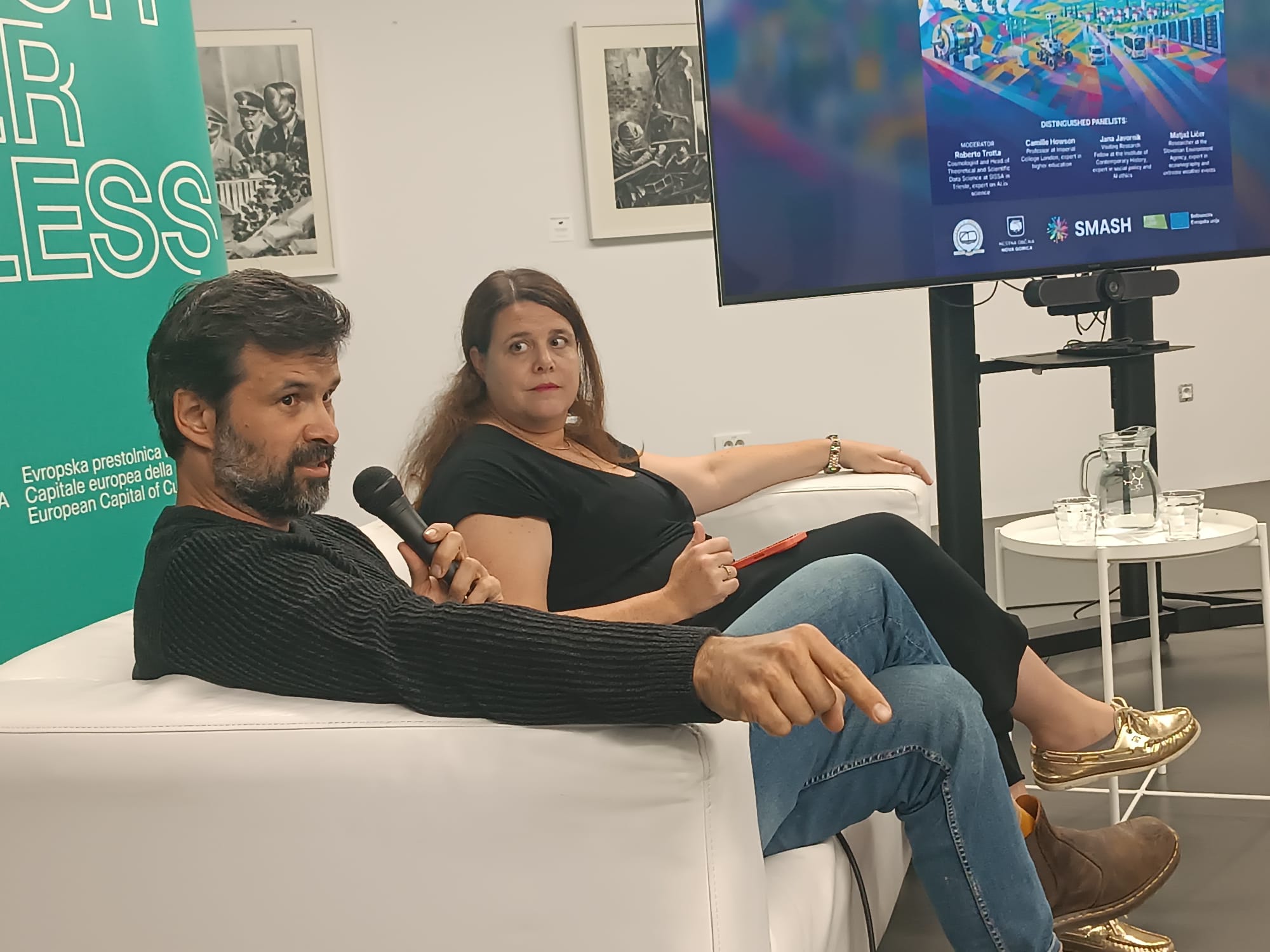
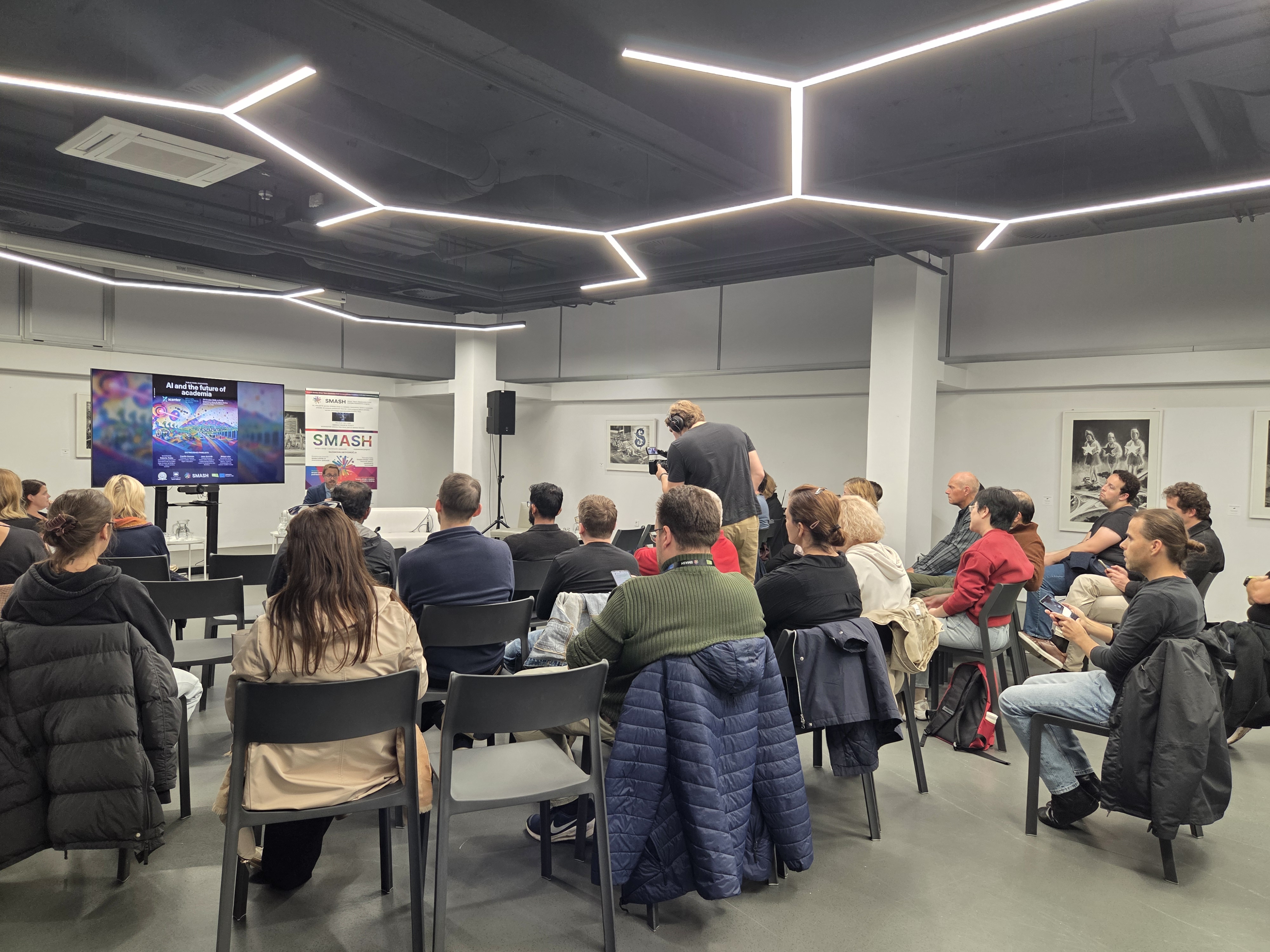
Yesterday, 20th October 2026, a public panel discussion titled "AI and the future of academia" was held at Xcenter in Nova Gorica as part of the second SMASHing workshop, which is hosted by the University of Nova Gorica.
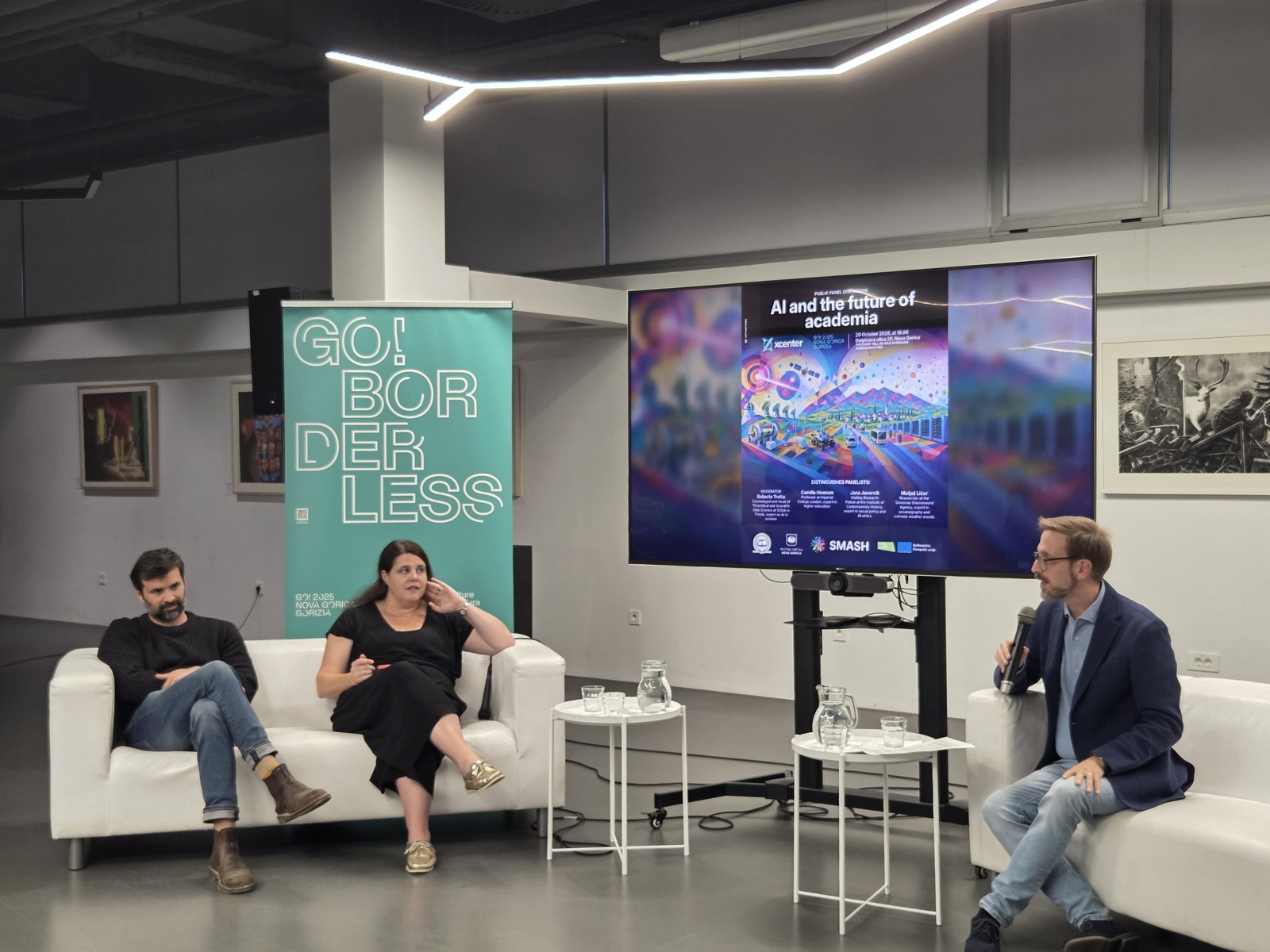
The panel discussion featured Dr. Camille Howson, a professor at Imperial College London, United Kingdom, and an expert in higher education, and Dr. Matjaž Ličer, a researcher at the Slovenian Environment Agency (ARSO), an expert in oceanography and extreme weather events. The discussion was moderated by Dr. Roberto Trotta, a cosmologist and group leader at SISSA in Trieste and an expert in artificial intelligence in science.
The participants agreed that artificial intelligence has brought a great deal of good to research and education: it has accelerated interdisciplinary collaboration, made it easier to obtain and analyse data, and in many cases made teaching more interesting and fun.
However, as Dr. Camille Howson pointed out, artificial intelligence has also exacerbated, though not caused, the crisis facing higher education, both on the side of students and on the side of teaching staff and researchers. Because of this crisis, Imperial College London has undertaken a complete overhaul of its curricula, intended to take into account the changes brought about by artificial intelligence.
The panel discussion addressed the following pressing questions: in today’s world of rapid change, including in the labour market, is it even worth studying, and what should one study? How should students’ progress and achievements be assessed if there is always a suspicion that assignments were done for them by large language models such as ChatGPT or Claude? What must a young researcher do to build a successful career in science? Do publication counts still matter in an age of predatory publishing, declining quality of peer review, and a flood of articles written by artificial intelligence? Finally, what is the meaning of our lives and our everyday endeavours?
Dr. Camille Howson said that education must be understood as a process, a path toward better understanding of the world, and that we should therefore no longer focus so much on results, which artificial intelligence can reach much faster than we can, while our self-awareness does not change at all. In her view, assessment should therefore focus primarily on students’ progress and effort. All participants agreed, however, that we are still searching for solutions to reignite young people’s desire for knowledge, and for what incentives higher education should offer them.
In response to a question from the audience about why groundbreaking discoveries have stopped appearing in recent years, Dr. Matjaž Ličer answered that, precisely because of artificial intelligence, there are fewer and fewer low-hanging fruit. He also argued that an entirely new system for evaluating the success of young researchers needs to be encouraged, because the “publish or perish” model no longer applies. Dr. Roberto Trotta highlighted the growing inequality between early-career researchers and those already established in their fields. The latter also benefit the most from using artificial intelligence, not least because of their experience, which helps them steer large language models more effectively in research.
To sum up the panel discussion in one thought: education allows us to improve our understanding of the world and of ourselves, and that is a pleasure in itself.
Text: Dr. Maja Bovcon
Photo: UNG Archive
Yesterday's public panel discussion "AI and the future of academia was also recorded, and the recording is available at:
- STA website: https://video.sta.si/video/10697#60843
- YouTube: https://www.youtube.com/live/JhNx0IqsQnM