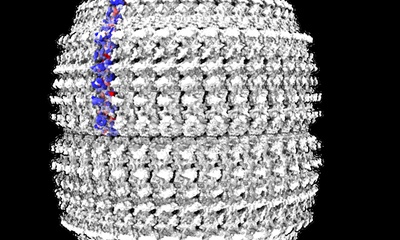
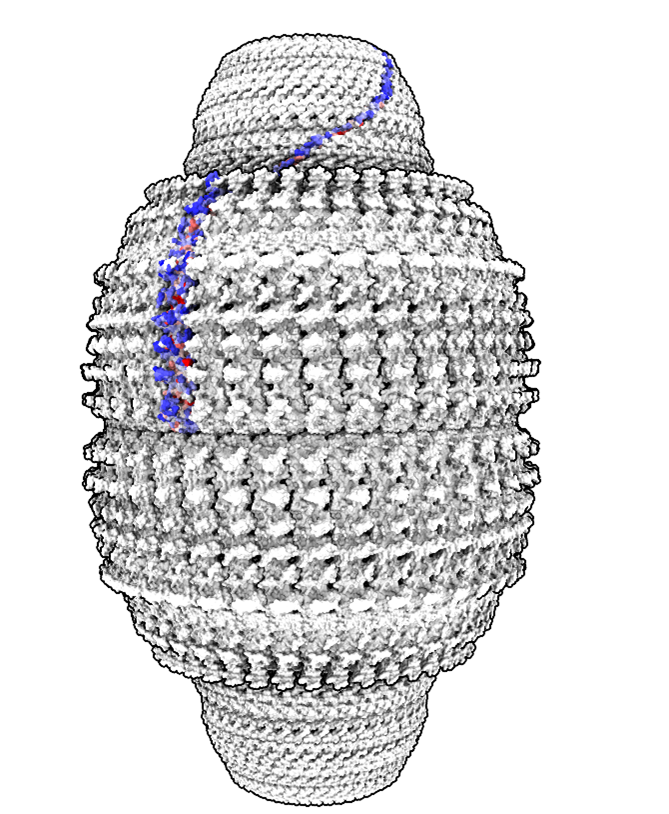
Researchers from the University of Nova Gorica leading the discovery of the dynamic architecture of a giant cellular nanoparticle
Using advanced scientific techniques, they discovered that the vault particle is not a rigid cage, but a flexible "breathing" machine that can regulate molecular transport and cargo exchange.
Scientists have long been intrigued by a mysterious structure found inside many animal cells called the vault particle. Vaults are among the largest molecular assemblies in human cells and are extremely common, yet their precise role remains unclear. Because they look like hollow barrels, researchers have suspected that they may act as tiny transport containers, carrying molecules around the cell. However, understanding how they open, close, and change shape has been a major challenge.
Dr. Fabio Lapenta, a former researcher from the Laboratory of Environmental and Life Sciences at the University of Nova Gorica, led by Assoc. Prof. Dr. Iain Robert White, put together an international team of researchers to investigate the structure and movement of human vault particles in unprecedented detail. For doing this, the research team used two advanced techniques: cryo-electron microscopy (cryo-EM) and molecular dynamics simulation, while the research was financed by the Slovenian Agency for Research and Innovation. The study was published in the prestigious journal Nature Communications.
Cryo-EM allows to visualize biological molecules at near-atomic resolution by rapidly freezing them and imaging them with electron beams. Molecular dynamics simulations then model how these structures move over time on a computer.
The team of researchers found that vault particles are not rigid containers. Instead, they naturally exist in at least two distinct shapes: one that is largely symmetrical and another that is slightly asymmetrical. This discovery reveals that vaults are highly flexible and can switch between different structural states.
Computer simulations showed that vaults undergo continuous “breathing” motions, gently expanding and contracting. Rather than being completely sealed, the vault shell contains pores and solvent-exposed regions that may allow molecules to enter, leave, or interact with the particle without requiring a dramatic opening event. These findings suggest that vaults may be dynamic molecular devices rather than static storage containers.
The researchers also identified specific contact points that help hold together the two halves of the vault. To test whether these contacts were important, they engineered mutations that disrupted them. The altered proteins were less able to assemble into complete vault structures, confirming that these interactions are essential for maintaining the particle’s architecture while still permitting flexibility.
Overall, the study provides the clearest picture yet of how human vault particles move and maintain their structure. As Dr. Fabio Lapenta explains: “Although the biological function of vaults remains unresolved, understanding their flexibility is an important step toward explaining how they might transport cargo, communicate with other cellular components, or participate in processes such as drug resistance, immunity, and cell signaling.” The work also demonstrates the power of combining high-resolution imaging with computer simulations to uncover the behaviour of large molecular machines that cannot be understood from static snapshots alone.
The scientific article is available at: https://www.nature.com/articles/s41467-026-72674-4
Text: Dr. Fabio Lapenta, edited by Dr. Maja Bovcon