
Students from the University of Washington on a two-week research visit to the University of Nova Gorica
From August 23 to September 7, 2026, the School of Science of the University of Nova Gorica will for the first time host astronomy students from the University of Washington.
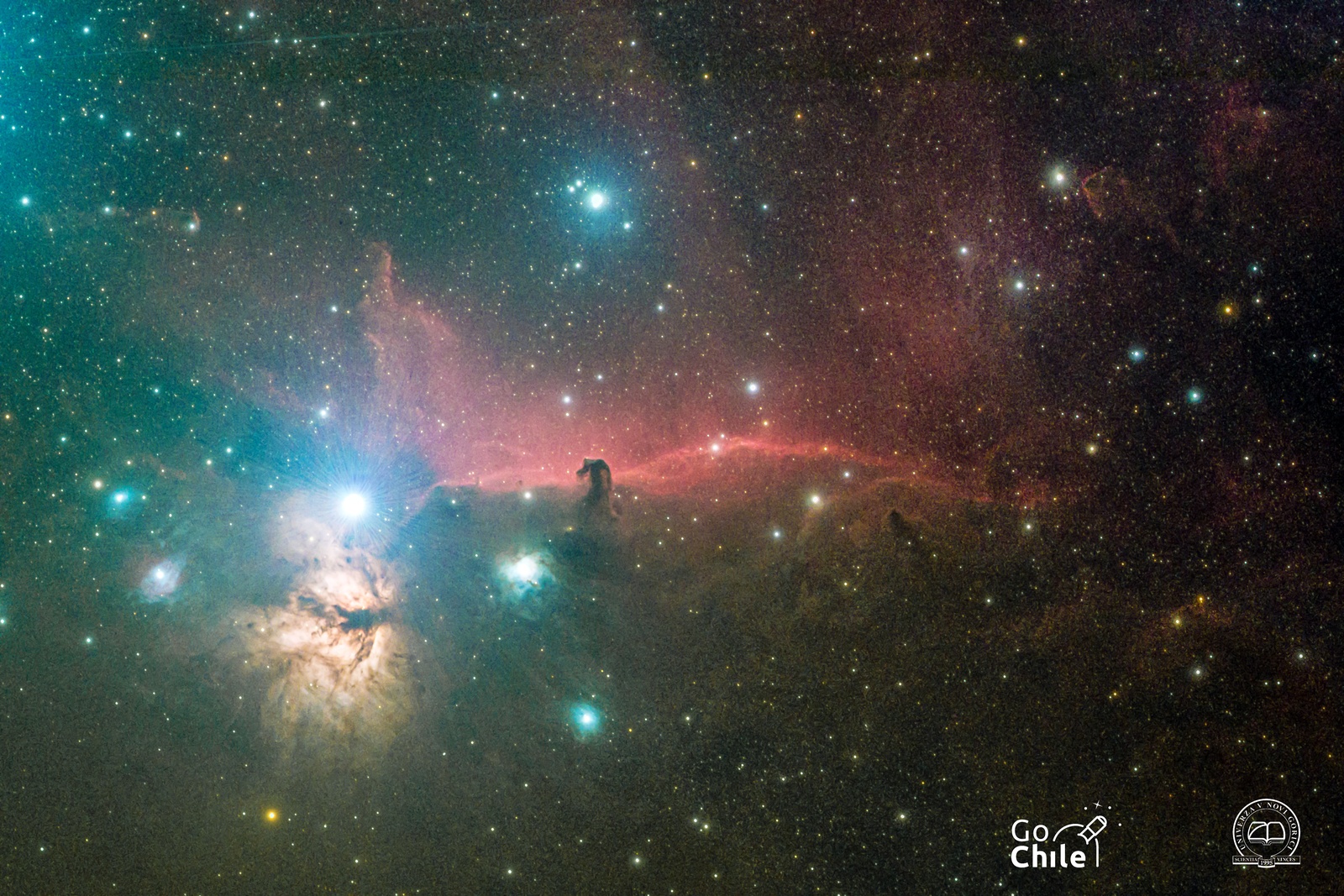
Twenty-four students from the University of Washington will visit Slovenia as part of a month-long study-abroad program titled "Astronomy Europe: Hands-on with Telescopes, Observing, and Artificial Intelligence in Astronomy," which will take place for two weeks at the University of Nova Gorica and for two weeks at the Višnjan Observatory in Croatia.
During their stay in Slovenia, researchers from the Center for Astrophysics and Cosmology at the University of Nova Gorica will introduce the students to the remotely operated GoChile telescope in Chile and to the use of artificial intelligence in the analysis of astronomical data. In addition to evening observations of celestial bodies and the creation of short research projects, the young people will attend various lectures during the day on the topics of astronomy and artificial intelligence. Among others, they will be taught by Prof. Dr. Uroš Seljak, a Slovenian professor of astronomy and physics in the Department of Physics at the University of California, Berkeley, and Prof. Dr. Mario Jurić, a Croatian professor in the Department of Astronomy at the University of Washington.
The visit to Slovenia will not only provide new knowledge in the fields of astronomy and artificial intelligence, but also opportunities to socialize with peers from the School of Science at the University of Nova Gorica who will take part in the program. Academic networking will include getting to know postdoctoral researchers working on the European Marie Skłodowska-Curie COFUND project SMASH (Machine Learning for Science and Humanities), which is coordinated by the University of Nova Gorica.
The group of students from the American university will build on their academic and research experience with an international experience of being placed in a European region where Slovenian, Croatian, and Italian cultures intersect. In addition to guided tours of the historical landmarks of Vipava and Ajdovščina, they will take part in day trips to Postojna Cave and Venice.
The visit will deepen the scientific ties between the University of Nova Gorica and the University of Washington. The two universities have for a number of years been collaborating on the American-Chilean Legacy Survey of Space and Time (LSST) project, which at the end of June, with the help of the Vera C. Rubin Observatory, began recording the largest cosmic film of all time.
As Prof. Dr. Mario Jurić, head of this study-abroad program, points out: "These encounters foster intercultural communication, deepen global awareness, and provide a unique context for applying scientific knowledge in practice."
Prof. Dr. Andreja Gomboc, professor of astronomy at the School of Science and researcher at the Center for Astrophysics and Cosmology at the University of Nova Gorica, adds: "Many young people leave Slovenia to gain research experience abroad, so we are very pleased that in this case it is the other way around. We are proud that we can offer students from the USA an interesting astrophysics program in which they will gain a variety of research and intercultural experiences."
Sanja, a student at the School of Science of the University of Nova Gorica, says that what she expects most from the program is "the exchange of knowledge, hands-on work, and new acquaintances. I'm really looking forward to the lectures that will connect astrophysics and machine learning, the field I work in."