Shapes of Shame in Slovene Literature
ARIS project
Although emotions are an indispensable part of literature, they were long neglected in literary scholarship, as they were often considered trivial or unscientific. In recent years, however, interest in emotions within literary studies has grown significantly, as evidenced by numerous new studies. Building on previous projects of the Research Centre for the Humanities at the University of Nova Gorica, which addressed intimacy in Slovene modernism and sexual desire in the works of Slovene women writers, we have designed a project focusing on one of the less researched emotions in world literature: shame. The project Shapes of Shame in Slovene Literature (SHAME) addresses this gap.
Why Shame?
Shame is a basic emotion experienced when individuals perceive themselves as deviating from social expectations. It is closely connected to fear of exclusion and to personal identity. In Slovene literature, shame plays an important role, yet it has not been systematically studied to date. The project Shapes of Shame in Slovene Literature addresses this gap by examining how shame is represented in Slovene literature from the 19th century to the present.
We understand shame as a complex phenomenon encompassing bodily responses, inner experience, and the social context in which it arises. The project undertakes a literary analysis of shame, shaming, and cringe as a form of secondary shame.
Selected Project Goals
1) Voice: A theoretical study of shame in Slovene literature with an emphasis on the concept of voice
The project examines how Slovene authors from the 19th to the 21st century represent shame and shaming through various narratological strategies. We investigate who bears shame, how the emotion is expressed, and how it is politically structured through literary narratives in which narrative techniques enable or deny characters a voice, revealing both the isolating and emancipatory potential of shame.
2) Genre: Genre-specific and thematic representations of shame
We analyze how shame is articulated across different literary genres—crime fiction, romance novels, folk tales, and autobiographical works—through motifs such as adultery, poverty, class inequality, and identity vulnerability.
3) Mapping: Space in relation to shame
We explore how literary works associate shame with real and imagined spaces, and how narrative techniques and perspectives mark spaces as shameful or emotionally charged.
4) Canon: Historical aspects of shame in relation to canonization
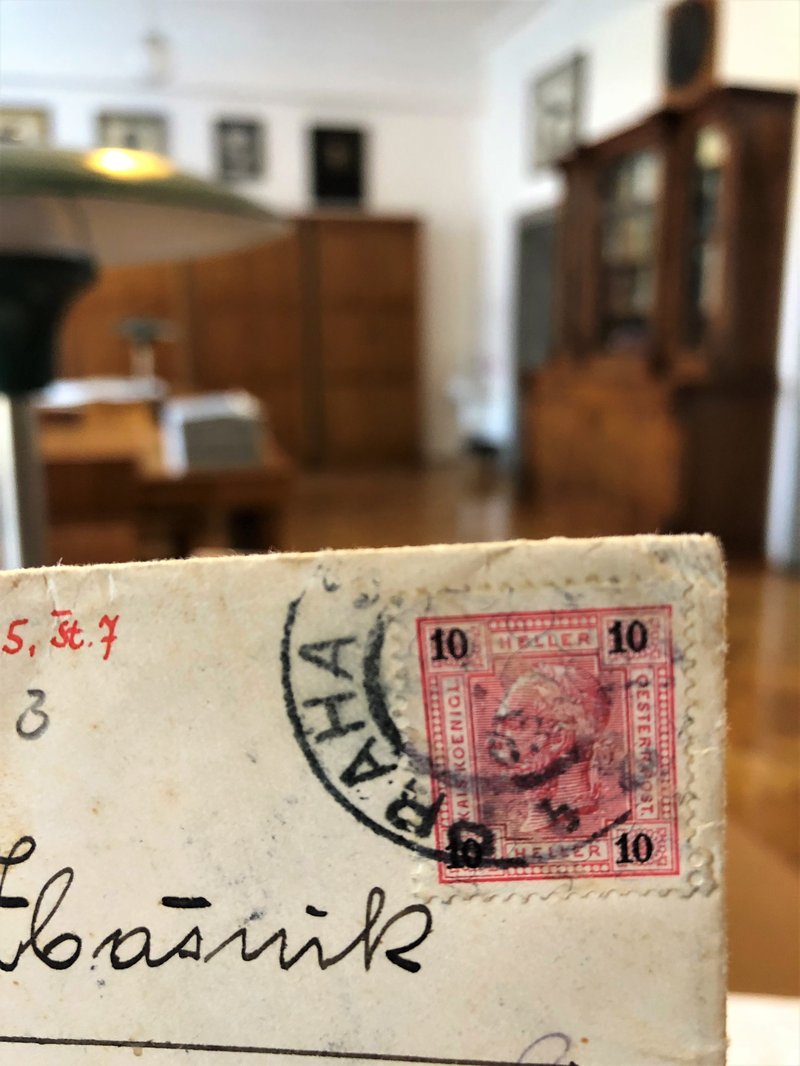
Within Slovene modernism, we analyze how literary authors were shamed through media and social mechanisms due to deviations from prevailing norms, and how shame contributed to their later exclusion from the literary canon. In its research on literary canon formation, the project also draws on the Electronic Collection of Letters, developed at the Research Centre for the Humanities, University of Nova Gorica.
Identities
Shame is an emotion closely linked to social norms, corporeality, sexuality, ethnicity, and social status, and it frequently appears in literature in connection with marginalized identities. We explore shame in literature through an intersectional lens, focusing on:
- ethnicity,
- social position,
- disability,
- gender,
- sexual orientation, etc.
The Poetics and Politics of Shame
We examine the poetics and politics of shame, investigating how this emotion shapes literary characters and their relationships, and how literature reveals tensions between the normative and the deviant.Our approach is based on the assumption that shame is not merely an inner experience, but also a result of cultural encounters and social discourses. We therefore understand shame as a tool for analyzing identity practices, social pressures, and mechanisms of control within the literary field.
Voice, Genre, Canon, and the Mapping of Literature
Our research does not focus solely on thematic motifs related to shame, but also explores how this emotion can shed new light on key concepts in literary studies, such as voice, genre, canon, and the mapping of literature. These concepts were largely shaped at a time when emotions were often overlooked in literary scholarship. By examining them through the lens of shame, we open up space for alternative perspectives, including:
- voice: who is granted the right to speak in literature? Who speaks and who remains silent?
- genre: how is shame expressed in crime fiction, sentimental romance novels, and folk tales?
- space: which spaces in literature are spaces of shame?
- canon: who has been marginalized or excluded from literary history due to shame or shaming, and how?
Computational Corpus Analysis
Using a corpus of 300 Slovene novels from the 19th and early 20th centuries, we will conduct a computational analysis of shame detection at the Department of Knowledge Technologies, Jožef Stefan Institute. By applying word embedding methods, we will expand an initial set of keywords, identifying semantically related expressions even in cases of low frequency of the word shame. We will use pretrained and corpus-adapted models for Slovene and apply the nearest-neighbor intersection method. After validation of text segments by literary experts, we will employ both unsupervised methods and supervised machine learning models, supported by data augmentation techniques, cross-lingual approaches, and large language models (ChatGPT).
A Team of 10 Researchers from Four Institutions
Research Centre for the Humanities, University of Nova Gorica
Dr. Katja Mihurko
Dr. Ana Toroš
Dr. Ivana Zajc
Dr. Primož Mlačnik
Darko Ilin
Jožef Stefan Institute, Ljubljana
Dr. Senja Pollak
Marko Pranjić
Dr. Matthew R. J. Purver
Faculty of Education, University of Ljubljana
Dr. Milena Mileva Blažić
Research Centre of the Slovenian Academy of Sciences and Arts, Ljubljana
Dr. Marijan Dović
Methods
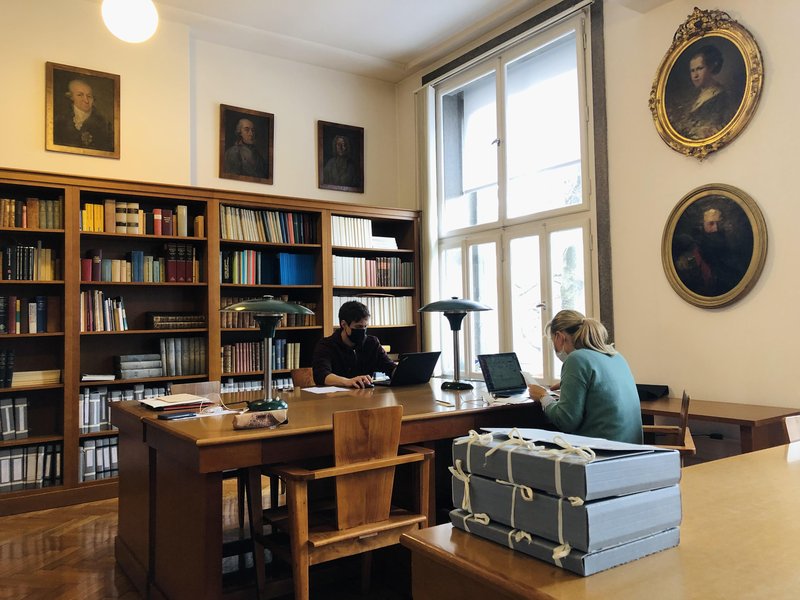
- close reading of selected literary texts,
- computational corpus analysis,
- mapping,
- critical analysis of literary canonization
Public Outreach Activities
- Cultural walk: The Path of Shame – historical and literary spaces viewed through a new perspective.
- Exhibition: artistic interpretations of literary representations of shame.
- Podcast, lectures: accessible and in-depth presentations of research across different media.
- Educational resources: updated curricula for higher education courses, revised university textbooks, and other resources on shame and literature for courses at the Faculty of Humanities, University of Nova Gorica.
Invitation to the International Scientific Conference
Follow project publications and events.
Project Information
The research project Shapes of Shame in Slovene Literature (J6-60113) is funded by the Slovenian Research and Innovation Agency (ARIS).
Project ID: J6-60113 (B)
Principal investigator: Dr. Ivana Zajc
Duration: 1 January 2025–31 December 2027
Contacts:
SHAME: shame@ung.si
ARIS: ARIS