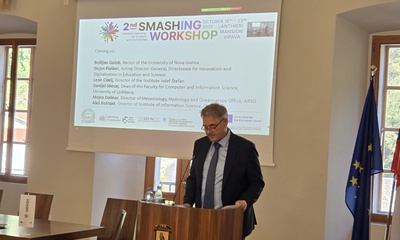
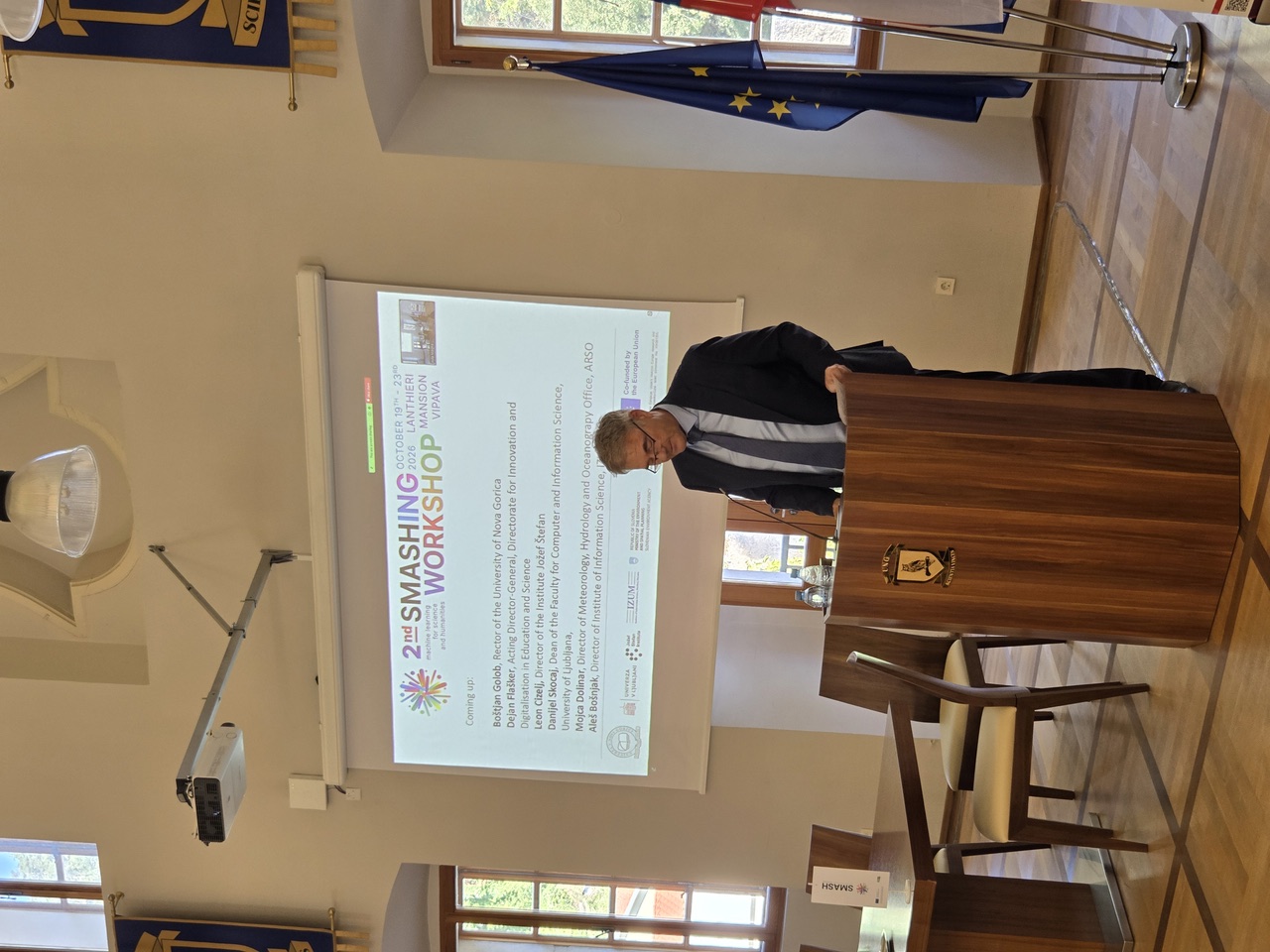
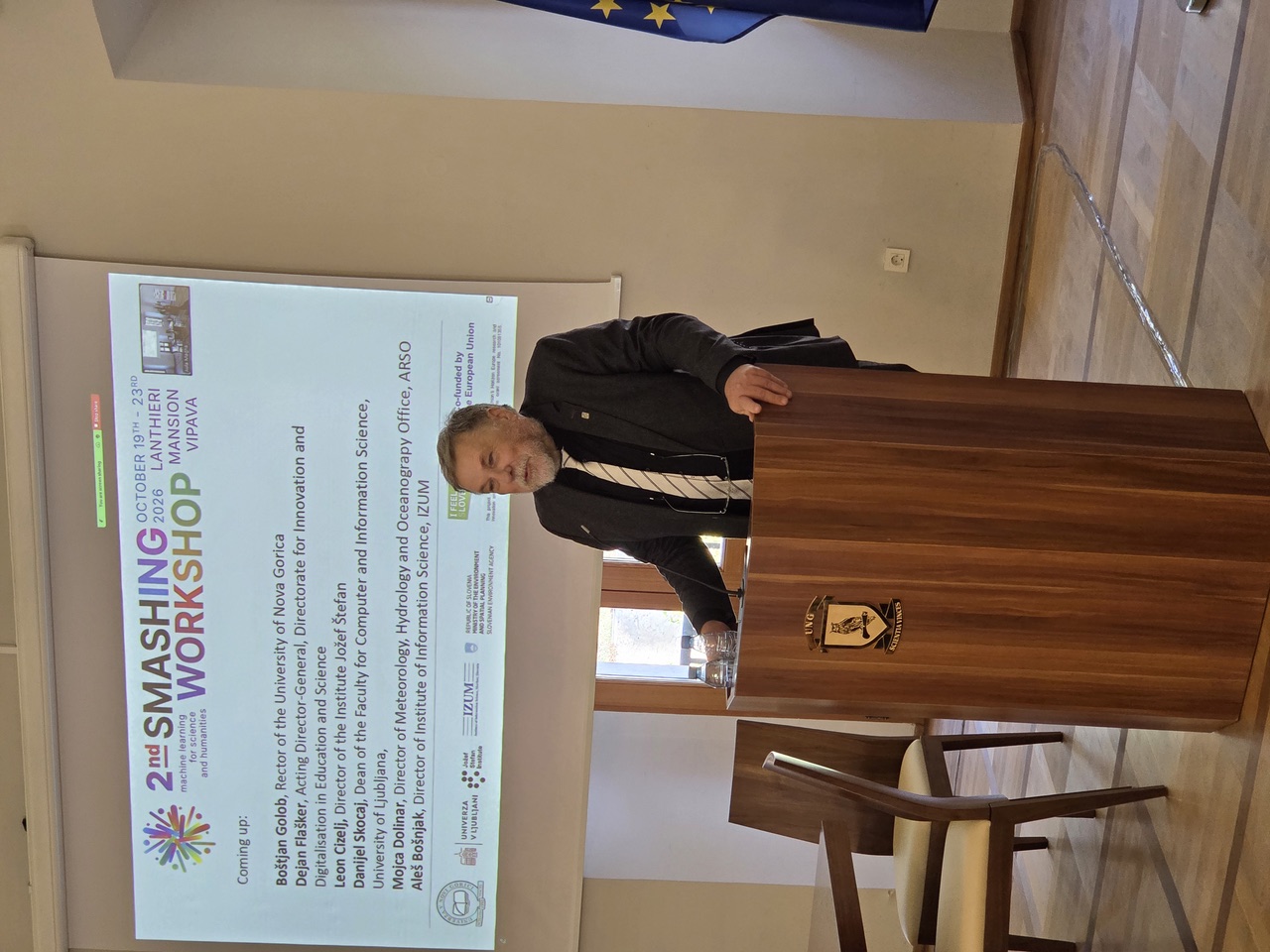
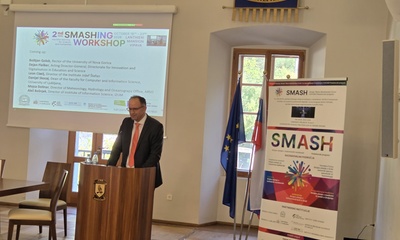
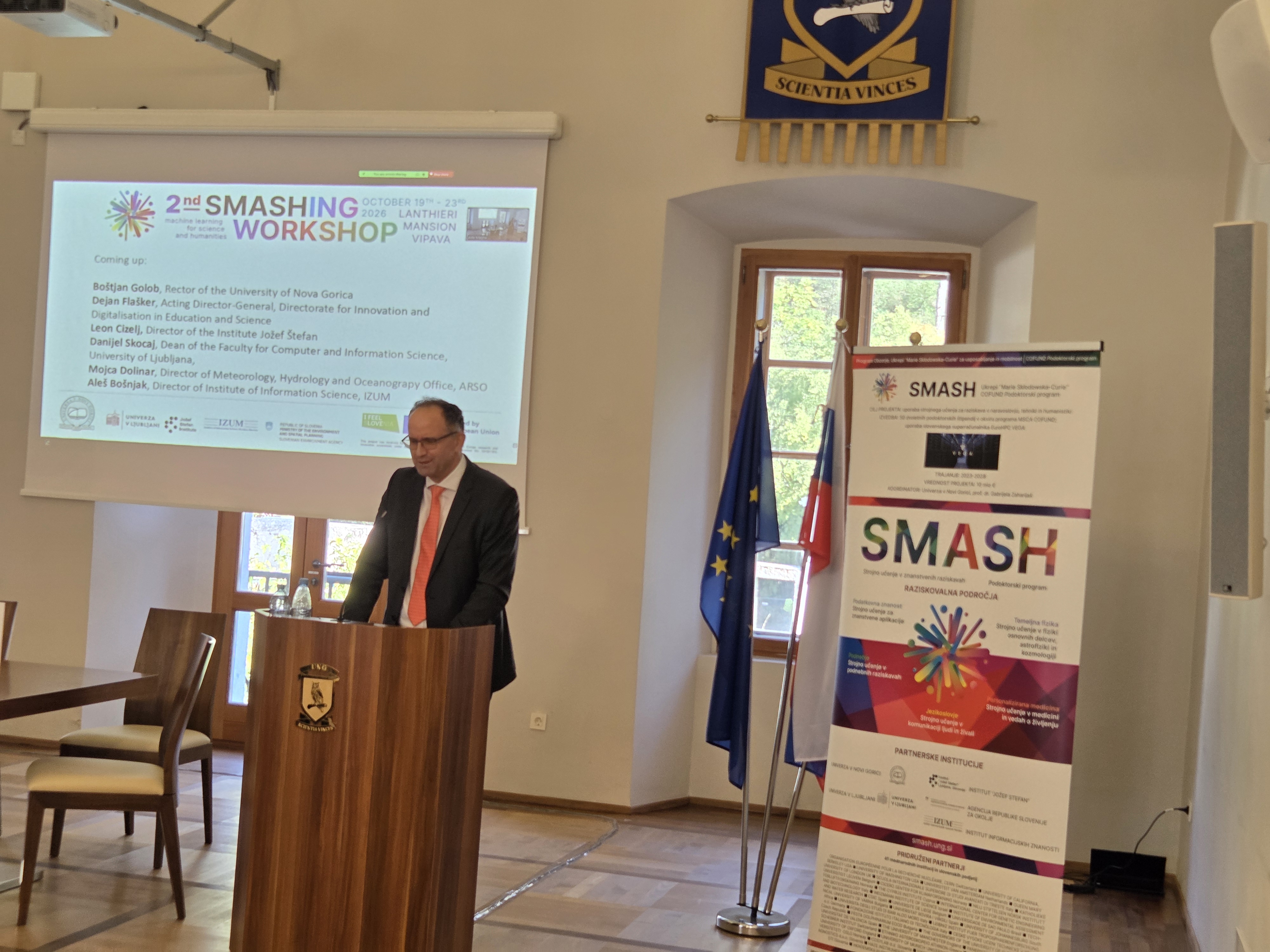
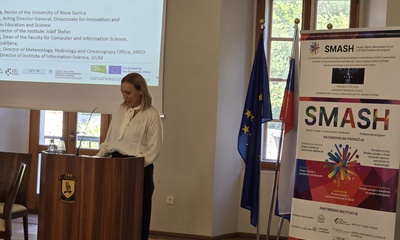
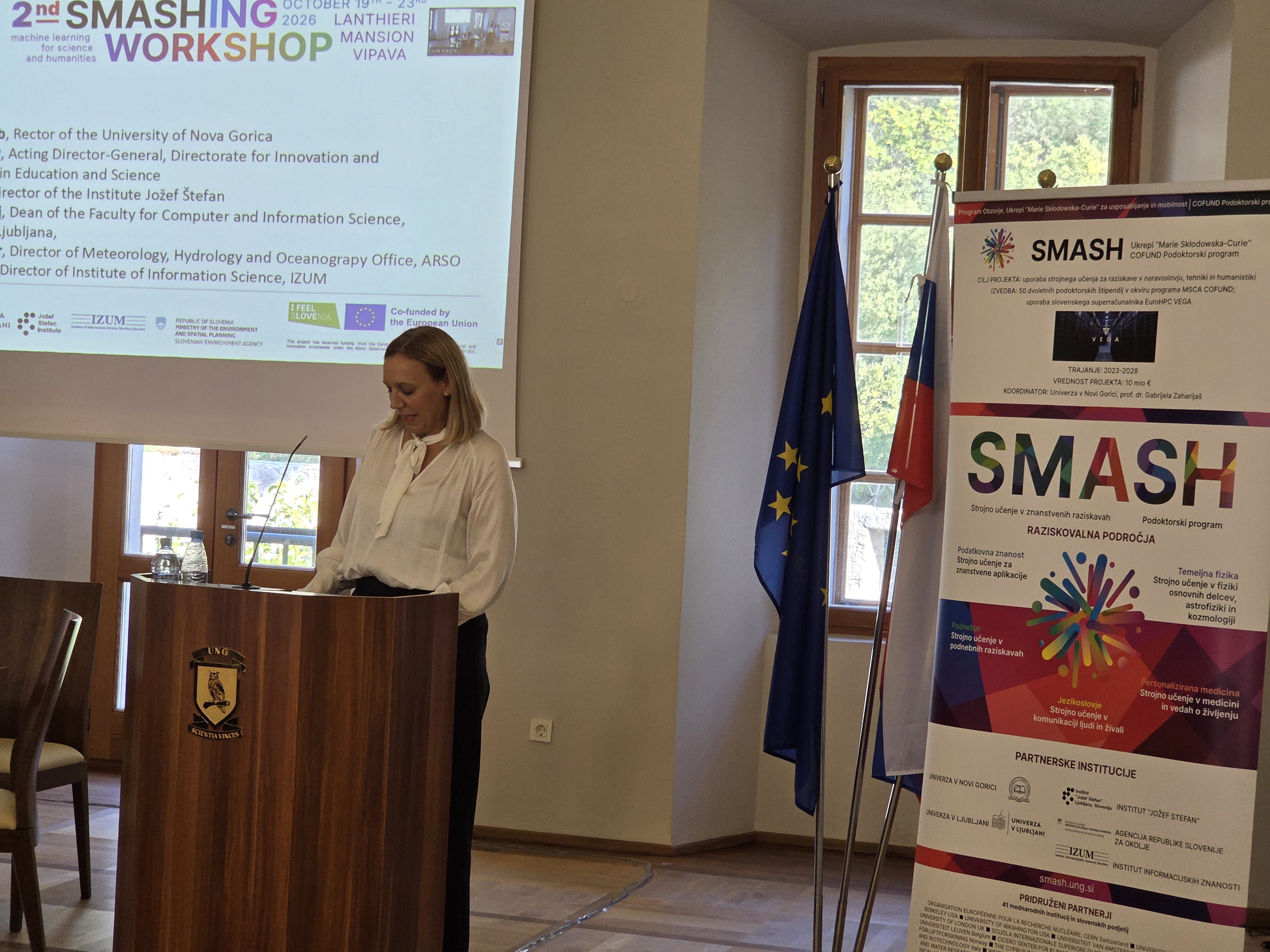
The second international workshop of the SMASH project is taking place at the University of Nova Gorica
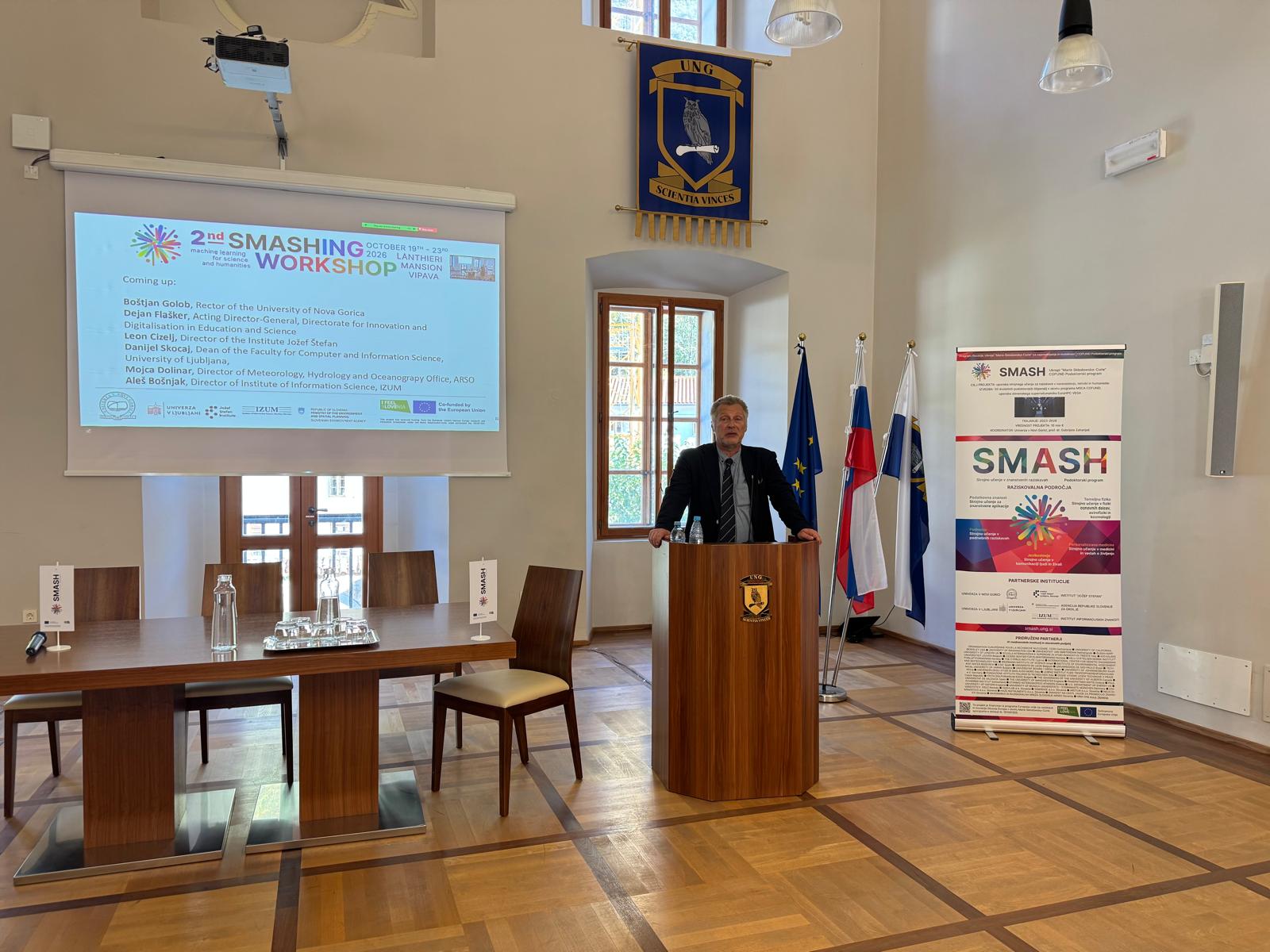
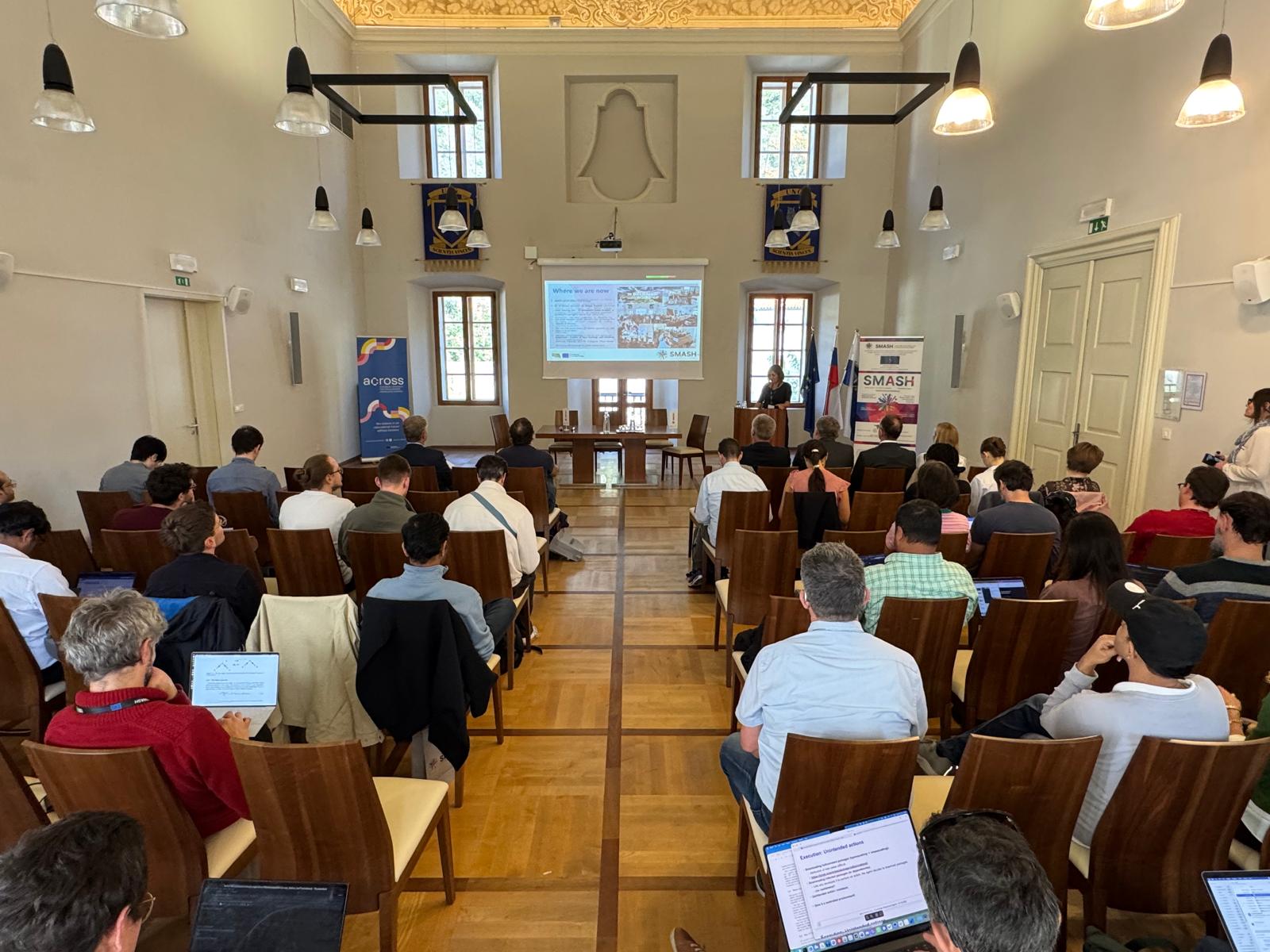
Yesterday, 19th October 2026, the University of Nova Gorica opened the second international workshop under the SMASH project, bringing together about 80 international and local scientists working on developing cutting-edge Machine Learning (ML) and Artificial Intelligence (AI) applications for science and humanities. The workshop, which runs until Friday, focuses on the impact of artificial intelligence on science and vice versa.
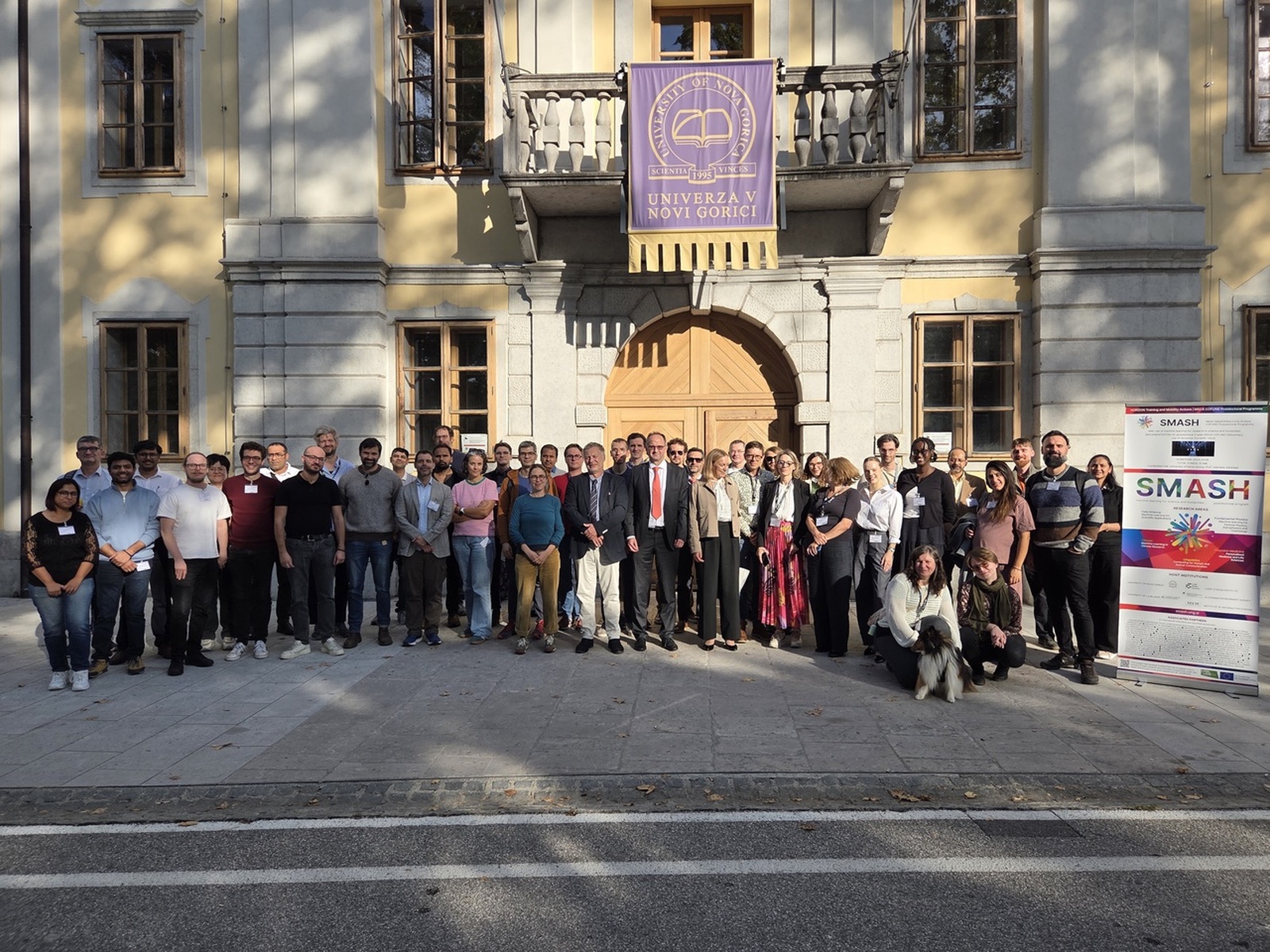
As Dr. Boštjan Golob, Rector of the University of Nova Gorica, explained at the opening, the university chose to take part in the SMASH project above all because it is interinstitutional and interdisciplinary: “The goals and purposes of this project are the use, well, partly also the development of artificial intelligence, but above all the use of AI methods in extremely diverse fields of science, from the humanities to astrophysics, through linguistics and so on. This is a very interesting field, especially for the future, because there will be more and more uses of artificial intelligence.”
The SMASH programme is coordinated by the University of Nova Gorica and connects researchers from five leading Slovenian institutions with about 30 academic institutions worldwide, as well as a number of Slovenian companies.
The project worth ten million euros is co-funded by the European Commission under the Horizon Europe programme, Marie Skłodowska-Curie Actions (MSCA) COFUND, and by the Republic of Slovenia, Ministry of Education, Science and Youth, and the European Union from the European Regional Development Fund (ERDF).
Gabrijela Zaharijas (astrophysicist, professor at the University of Nova Gorica, and coordinator of the SMASH project) highlighted the importance of the SMASH project in attracting young talent to Slovenia: “With the help of the SMASH project, we hired 50 postdoctoral researchers to come and work in Slovenia. And many of them have stayed in Slovenia.”
Dr. Matjaž Puh from the Centre for Astrophysics and Cosmology at the University of Nova Gorica explained: “This project is a very good opportunity for Slovenian researchers to return from abroad. In my case, I can say that this project made it easier for me to decide to return to Slovenia.”
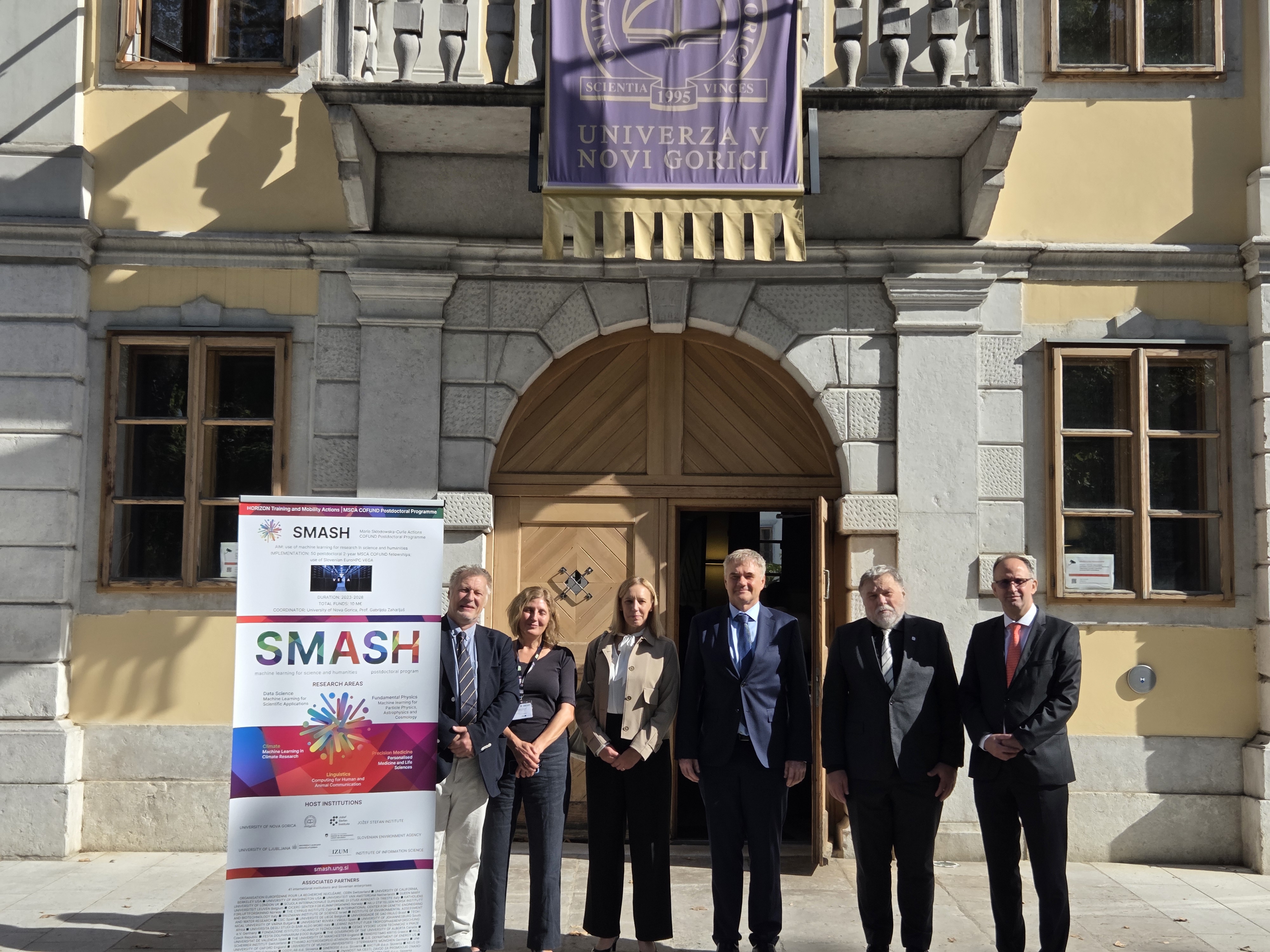
At the opening ceremony, the participants were addressed by Dr. Boštjan Golob (Rector of the University of Nova Gorica), Dejan Flašker, MA (Acting Director-General, Directorate for Innovation and Digitalisation in Education and Science), Dr. Leon Cizelj (Director of Institute Jožef Stefan), Dr. Danijel Skočaj (Dean of the Faculty of Computer and Information Science at the University of Ljubljana), and Mojca Dolinar, MA (Director of Meteorology, Hydrology and Oceanography Office, ARSO).
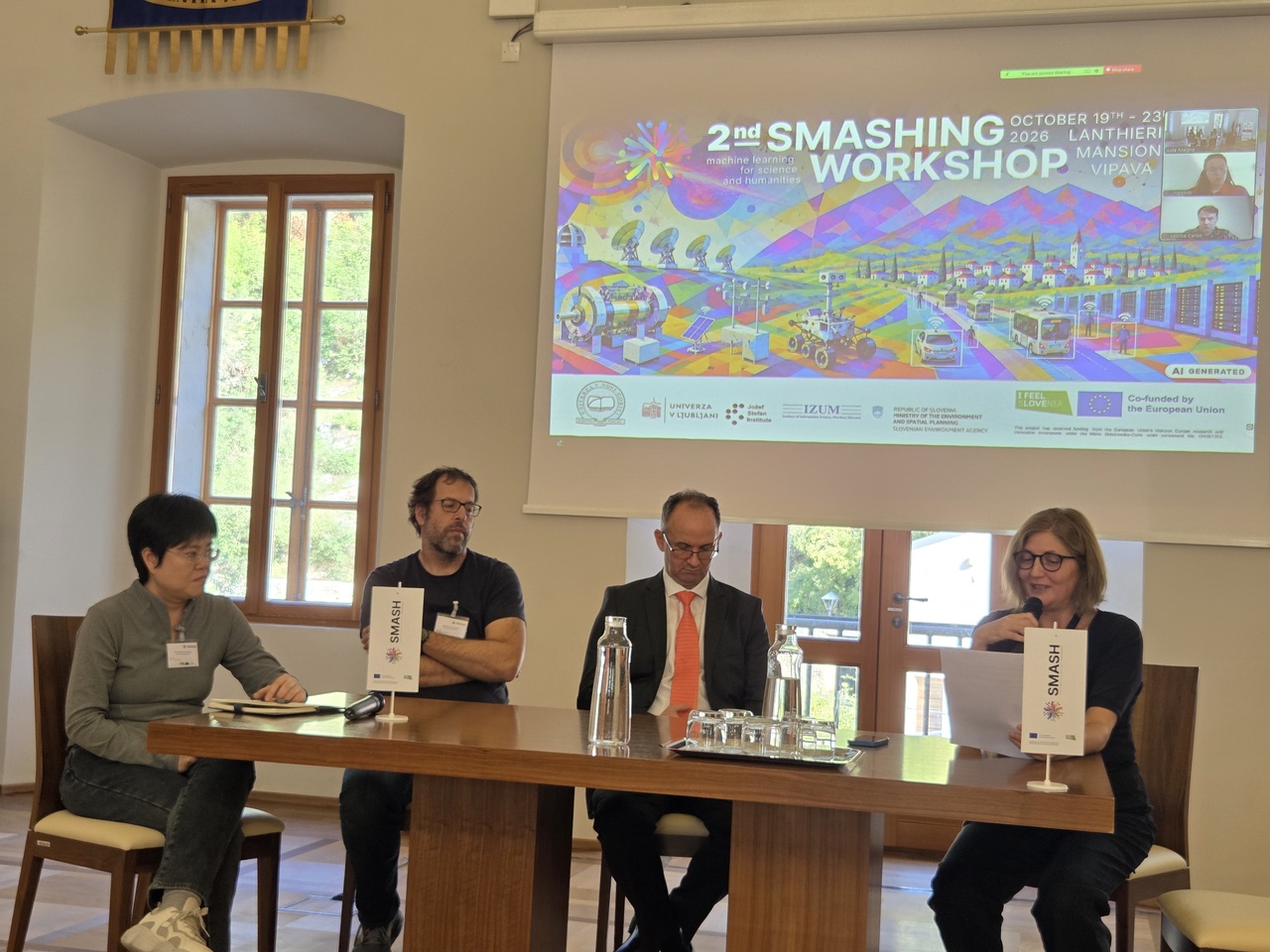
The opening words was followed by a round table on “Shaping the Future of AI in Science: Funding Strategies and Opportunities”, at which participants from Slovenia, the European Commission, the United States of America, and China compared their approaches to research funding, AI infrastructure, institutes dedicated to artificial intelligence, and public-private cooperation. They also discussed the importance of Europe’s technological sovereignty and of the human factor in scientific understanding and judgment.
There was also discussion of the fear that artificial intelligence will replace us, and especially scientists at the beginning of their careers.
Dr. Leon Cizelj, Director of the Jožef Stefan Institute, believes above all “that artificial intelligence, both in science and in life in general, will bring a great deal of relief from routine work to all of us in the coming years.”
Dr. Danijel Skočaj, Dean of the Faculty of Computer and Information Science at the University of Ljubljana, stressed that it is the responsibility of experienced researchers to pass on their experience to younger researchers, to guide them, to verify the work of AI agents, to use a hybrid approach, and to continue ensuring funding for young researchers.
Text: Maja Bovcon
Photo: UNG archive